I realize it’s tilting at windmills, but I keep hoping Facebook’s founder and CEO will realize at some point that he could make money by selling a service that preserves privacy — and, in this era of massive government and criminal hacking, security — to actual user-customers. This would be different than making the users the product, as the service currently does.

More in my latest Guardian column…

America’s criminal justice system is a disaster for the nation. The political left has known this for years, but has been cowed into silence by right-wingers’ ability to attach a “soft on crime” label to anyone who dares speak up for reform.

So while it’s incredibly hypocritical that some people on the right are now pushing for (some) reform, it’s also welcome. If this becomes a nationwide movement, we’ll all be better off, no matter who gets the credit.


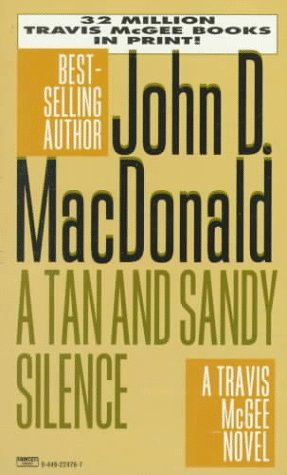
As I do periodically, I’m re-reading the late John D. MacDonald’s novels, including the Travis McGee series. The books are a trenchant testament to their era — and not always in good ways, such as the irredeemable sexism leaps out of the pages.

But the novels were also brilliant commentaries on the America of MacDonald’s time — and even ours, decades after their publication, when so much remains so smart and prescient.

Here’s a passage from A Tan and Sandy Silence, a 1971 McGee novel.

The trouble with the news is that everybody knows everything too fast and too often and too many times. News has always been bad. The tiger that lives in the forest just ate your wife and kids, Joe. There are no fat grubworms under the rotten logs this year, Al. Those sickies in the village on the other side of the mountain are training hairy mammoths to stomp us flat, Pete. They nailed up two thieves and one crackpot, Mary. So devote wire-service people and network people and syndication people to gathering up all the bad news they can possibly dredge and comb and scrape out of a news-tired world and have them spray it back at everybody in constant streams of electronics, and two things happen. First, we all stop listening, so they have to make it ever more horrendous to capture our attention. Second, we all become even more convinced that everything has gone rotten and there is no hope at all, no hope at all. In a world of no hope the motto is semper fidelis, which means in translation. “Every week is screw-your-buddy week and his wife, too, if he’s out of town.”


At the request of the European Parliament — one of the few legislative bodies that’s shown any serious concern about the massive surveillance programs run by the US, UK and others — Edward Snowden sent in written testimony that is well worth reading. Here’s a key paragraph:

I believe that suspicionless surveillance not only fails to make us safe, but it actually makes us less safe. By squandering precious, limited resources on “collecting it all,” we end up with more analysts trying to make sense of harmless political  dissent and fewer investigators running down real leads. I believe investing in mass surveillance at the expense of traditional, proven methods can cost lives, and history has shown my concerns are justified.

Read it all.

At the Guardian, Heather Long suggests we stop the typically American practice of asking everyone we meet what they do. We make our jobs our identity, she observes, and that’s a bad idea. I agree.

A note: Heather has been my editor in recent months, and she’s leaving for CNN. I wish her the best and thank her for being a superb editor.

In 2008 Kevin Kelly, author and former editor of Wired magazine, posted an incisive and influential essay, “1,000 True Fans.” He noted that the “long tail” in media is great for the aggregators (Google, Amazon, etc.) and the general public, but a problem for artists who weren’t stars. He wrote:

 A creator, such as an artist, musician, photographer, craftsperson, performer, animator, designer, videomaker, or author – in other words, anyone producing works of art – needs to acquire only 1,000 True Fans to make a living.

A True Fan is defined as someone who will purchase anything and everything you produce. They will drive 200 miles to see you sing. They will buy the super deluxe re-issued hi-res box set of your stuff even though they have the low-res version. They have a Google Alert set for your name. They bookmark the eBay page where your out-of-print editions show up. They come to your openings. They have you sign their copies. They buy the t-shirt, and the mug, and the hat. They can’t wait till you issue your next work. They are true fans.

I’d experienced this several decades earlier, when I spent seven years playing music for a living. My band had the kinds of fans Kevin describes here. We played mostly around New England, and almost no matter where we appeared, at least a few of them would show up. They were, for us, much more than a friendly audience. They were friends, and part of a community.

Later, as a journalist practicing my trade relatively early in in the digital age, I discovered something else: My readers knew more than I did. This was blindingly obvious in retrospect, if not at the time. Not only did they know things I didn’t, but they could easily let me know via online communications.

When a blog software pioneer, Dave Winer, launched one of the first blogging platforms in 1999, I jumped aboard. It became essentially part of my newspaper column at Silicon Valley’s San Jose Mercury News, and the comments became a vital part of the conversations I was having with my readers.

As noted elsewhere in this ebook, I used the blog to post chapter drafts of my first book. The suggestions from readers were amazingly helpful, and the book was vastly better as a result.

Since then, our ability as authors to interact with our audiences has only grown — and I’m more convinced than ever that we need to move past the word “audience” and think about “users” and “community” in this context.

My more recent book, Mediactive, isn’t just a book. It’s also a toolkit for modern media literacy. I offer blog-based lesson plans for teachers, and make everything available under a Creative Commons license to help spread my ideas on what I believe is an essential skill for the 21st Century. I also have great conversations in email, on Google+ an Twitter, and of course on my blogs, with people who want to talk about this.

Creating users and communities has meaning for an author’s bottom line as well. As crowdfunding platforms like Kickstarter and self-publishing tools of various kinds give artists ways to go around the traditional publishing industry cartel, authors can leverage their communities into support. We can reach our 1,000 fans much more easily, with less and less conversational and financial friction, than we ever could before.

A caution: Community development and management skills don’t come naturally to everyone. I failed badly at this in a digital news startup some years back, and I don’t claim to be an expert now. But having a conversation isn’t a chore for me, and what I gain from it is more than worth the effort.

Where can we take conversation and community? For one thing, we can recognize that a single price point — a book’s list or street price — is an absurdly limited view of the emerging book ecosystem. Some authors are experimenting with higher-priced special editions for what we might call their 250 Super Fans who not only buy everything but are happy to spend more for a special version. Or maybe there’s a premium-priced “dinner with the author” when he or she is visiting a new city.

One more caution: Conversations and communities take time. Authors have to ask themselves how much time they can afford to divert from their most essential job: writing and re-writing. If they neglect that, the rest won’t matter.

In the news sphere, there can be endless arguments over whether this person or that person is a journalist. It’s a pointless conversation, because the real question is: What is journalism? Edge cases are easy. The New York Times is journalism. The “BlahBlahBlog” isn’t. But it gets blurry fast, and that’s where the conversation gets interesting.

We’re starting to have the same discussion in the book world. Again, the edge cases are easy. Here’s a book:

strossCharlie Stross’ novel comes in print — bound pages — and in several ebook formats. It’s a book, period.

Not all books in the traditional realm are based on text, of course, though I’m hard-pressed to name a book that doesn’t include at least some text. Graphic novels and the heavy oversized volumes of photography we put on our coffee tables are just as much books as Charlie’s novel or Moby Dick. But just as a collection of blog posts isn’t a book, the latest installment in some comic series isn’t either (though we do call them comic books).

This is also a collection of bound pages. It’s not a book, at least not in the context I want to use here:

notebookThe little notebooks I carry around, and into which I write notes of various kinds based on ideas and conversations, isn’t meant to be seen by others. It doesn’t start here and end there. It’s random. Book? Nope.

What about this volume, called Between Page and Screen:

between page and screenIts authors call it “an augmented reality book of poems.” Here’s a video of how it works. Come back when you’ve watched it.

Is this really a book? Or is it something else, even if part of it fits between two covers?

Now check out “The Elements” on the iPad:

I love it. Is it a book? Probably, but I’m not sure what I’d say if I had to give a yes or no answer.

Welcome to the blurry world of tomorrow’s books — blurry in precisely the same way that some other media forms have become. It’s all about digital technology, of course, which subsumes everything that existed before, and then extends it into new realms. things bleed into each other: The New York Times posts excellently produced video online, and the BBC publishes text-based articles.

The experimentation in book publishing today is great to see. People are using technology to push out the boundaries. At some point, though, what they create no longer seems to fit into any category with historical antecedents.

I’ve asked any number of people in recent months what a book is. The answers have ranged about as widely as you’d expect. Several zeroed in on a fairly simple but powerful notion: a book starts here, holds your attention for a non-trivial period of time, and ends there. Then again, so does a walk in the woods, or a film.

I suspect a book will be anything we decide to call one. Words take on new meanings. When was the last time you dialed a phone number by turning a little wheel on a landline with a wire connected to a wall plug? But you knew what I meant by dialing.

I worry that our shrinking attention spans will make traditional reading less and less relevant. But, ever optimistic, I’ll predict that books — whatever that means — do have a future, because we need them.